
Last updated November 16, 2026
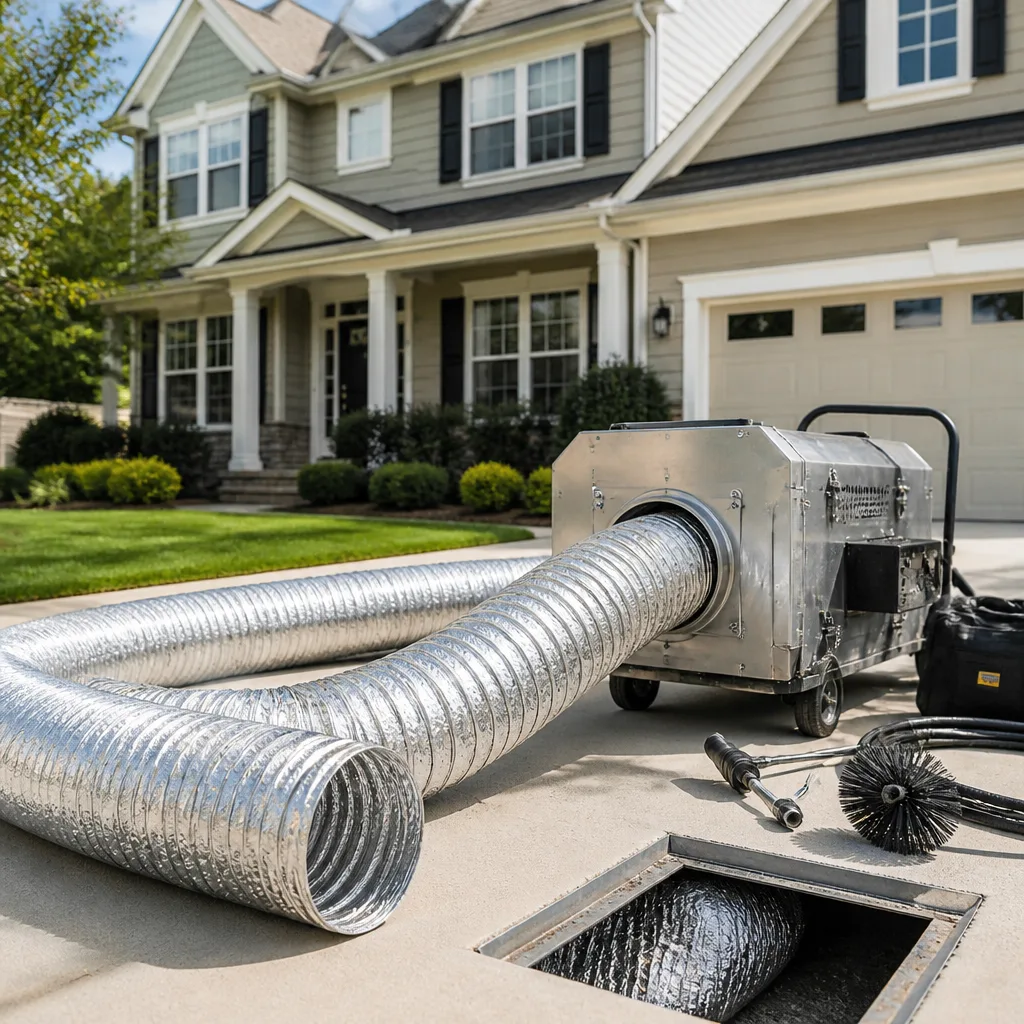 Whole-home duct cleaning
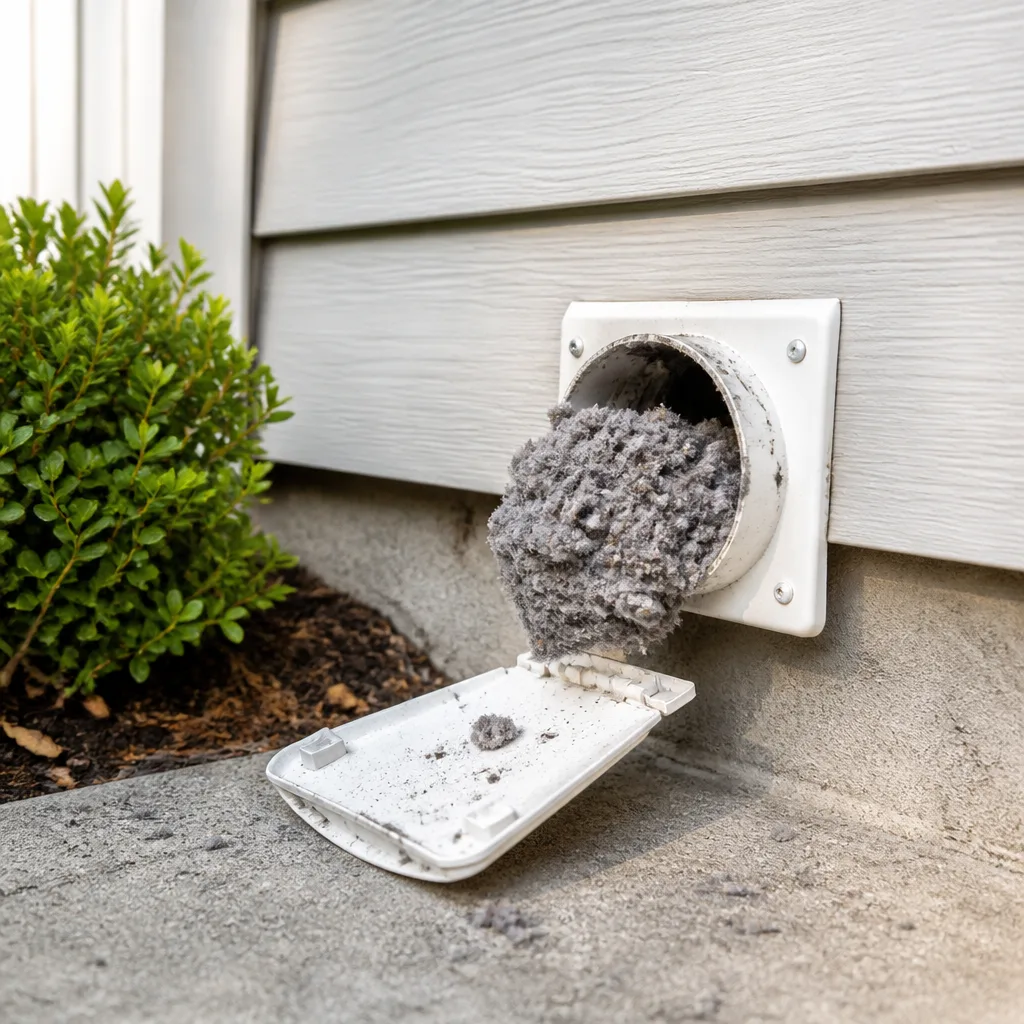 Dryer vent cleaning
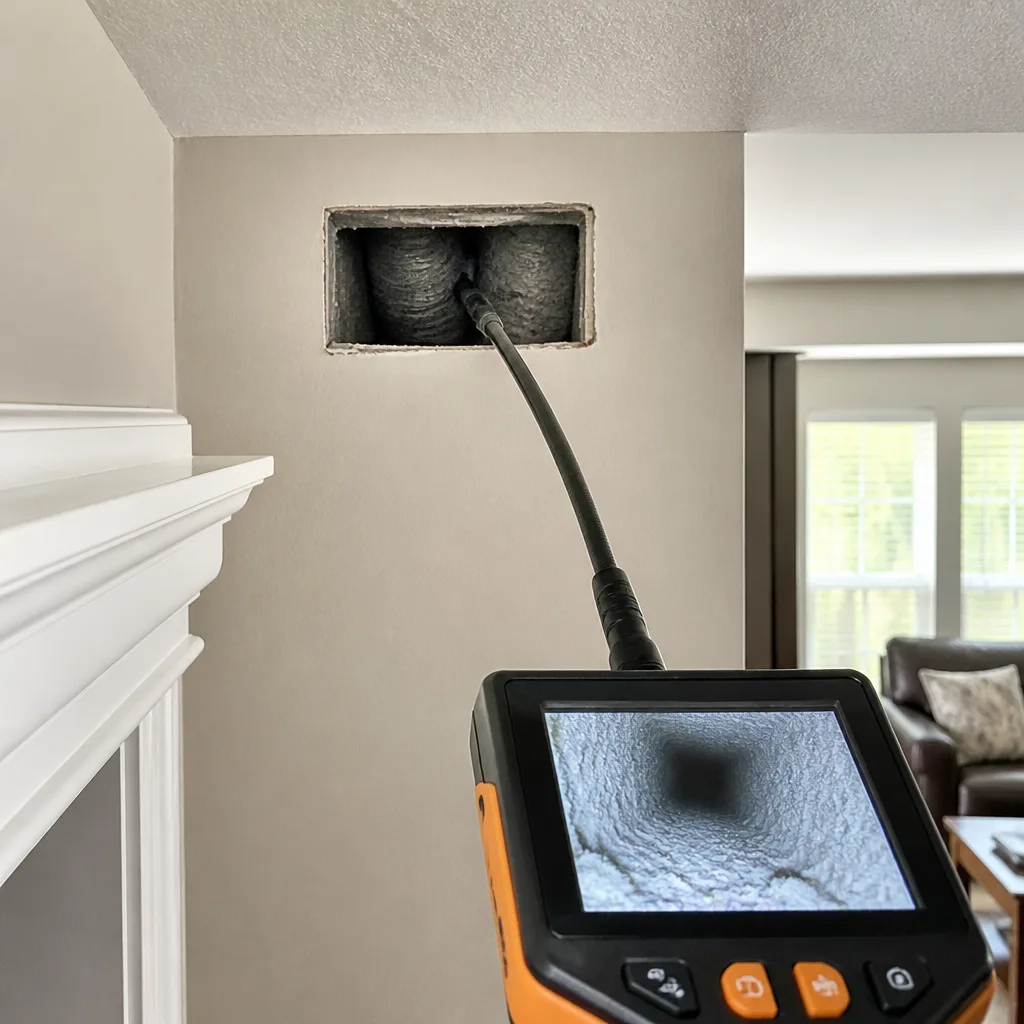 Camera inspection
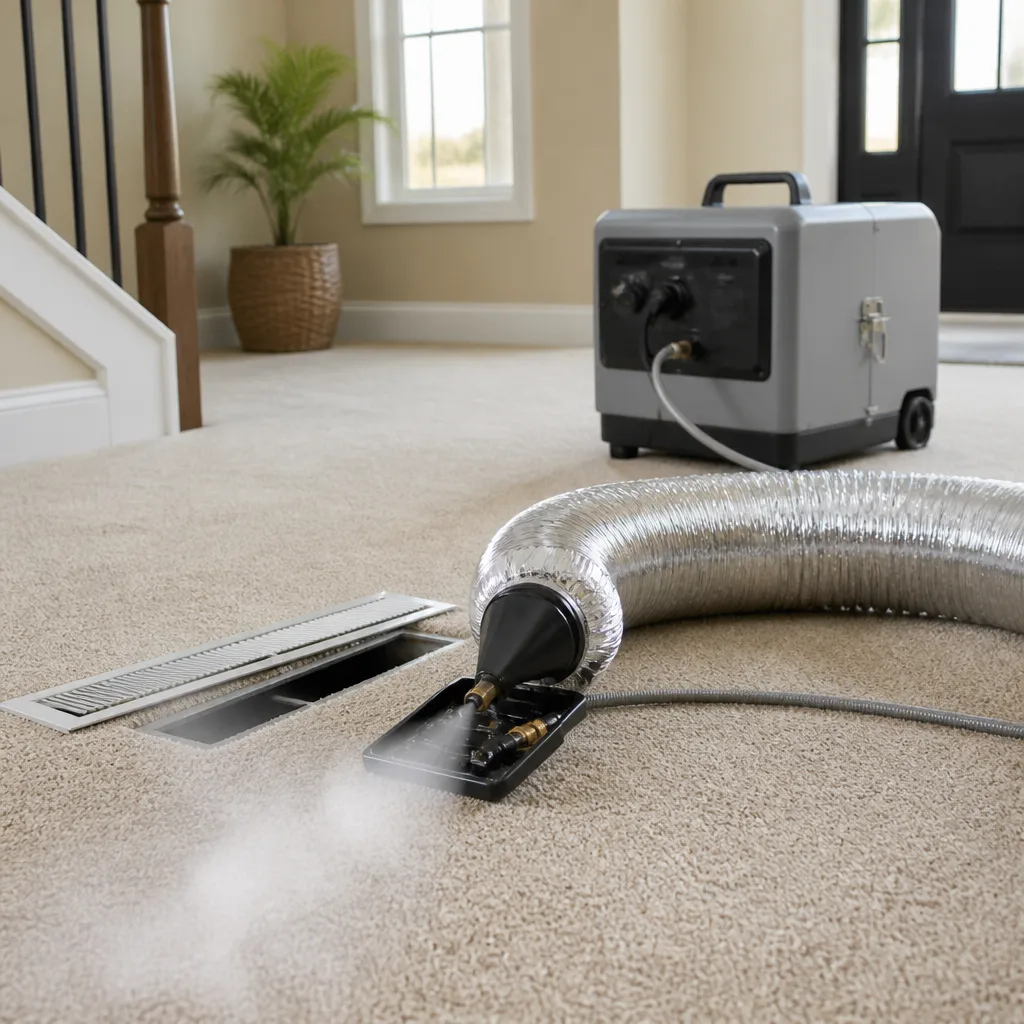 Sanitizing & deodorizing
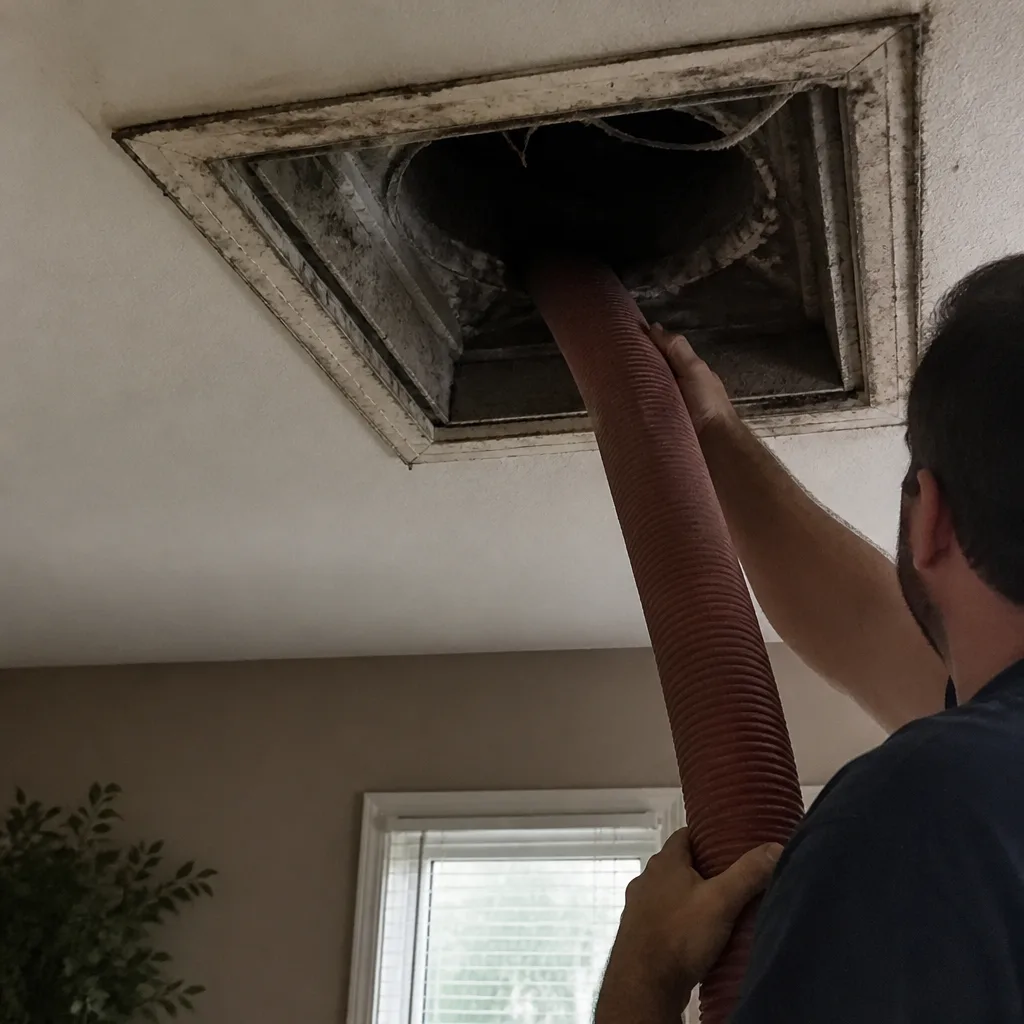
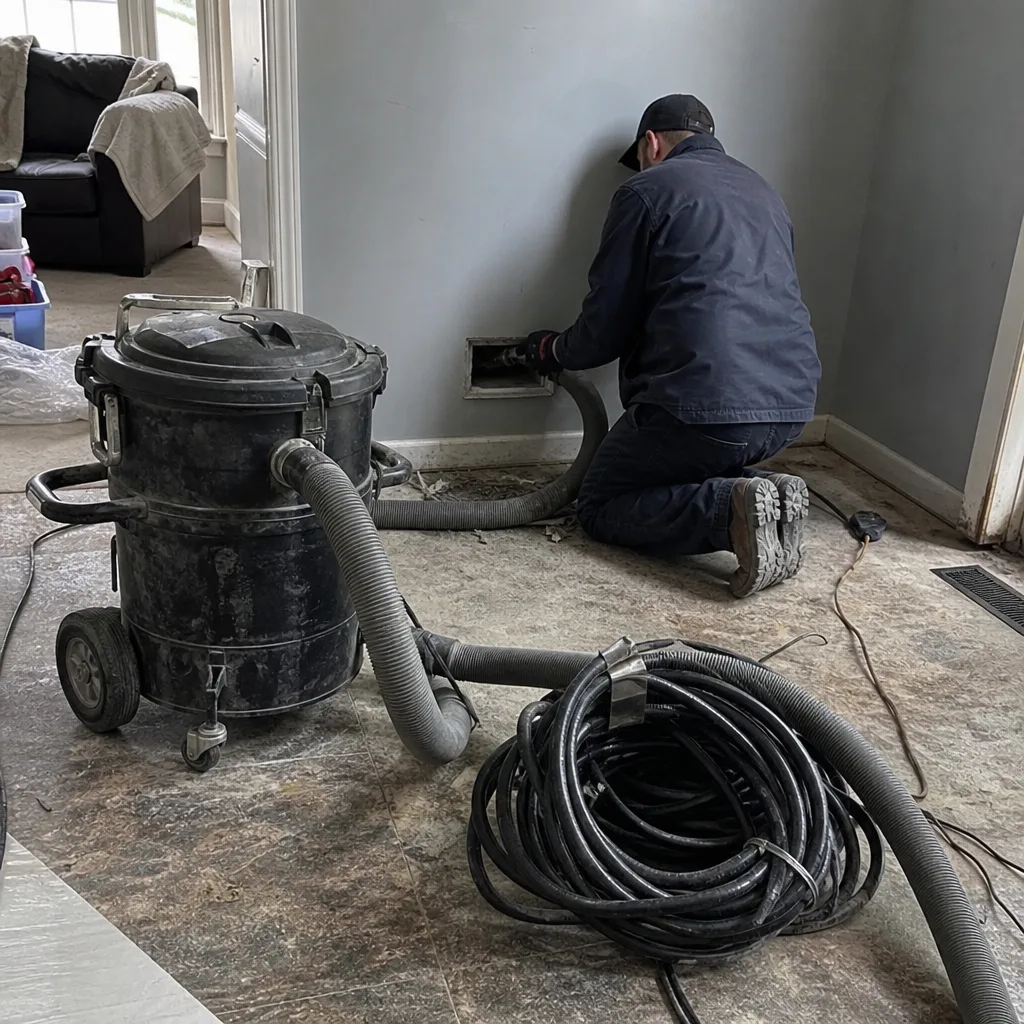
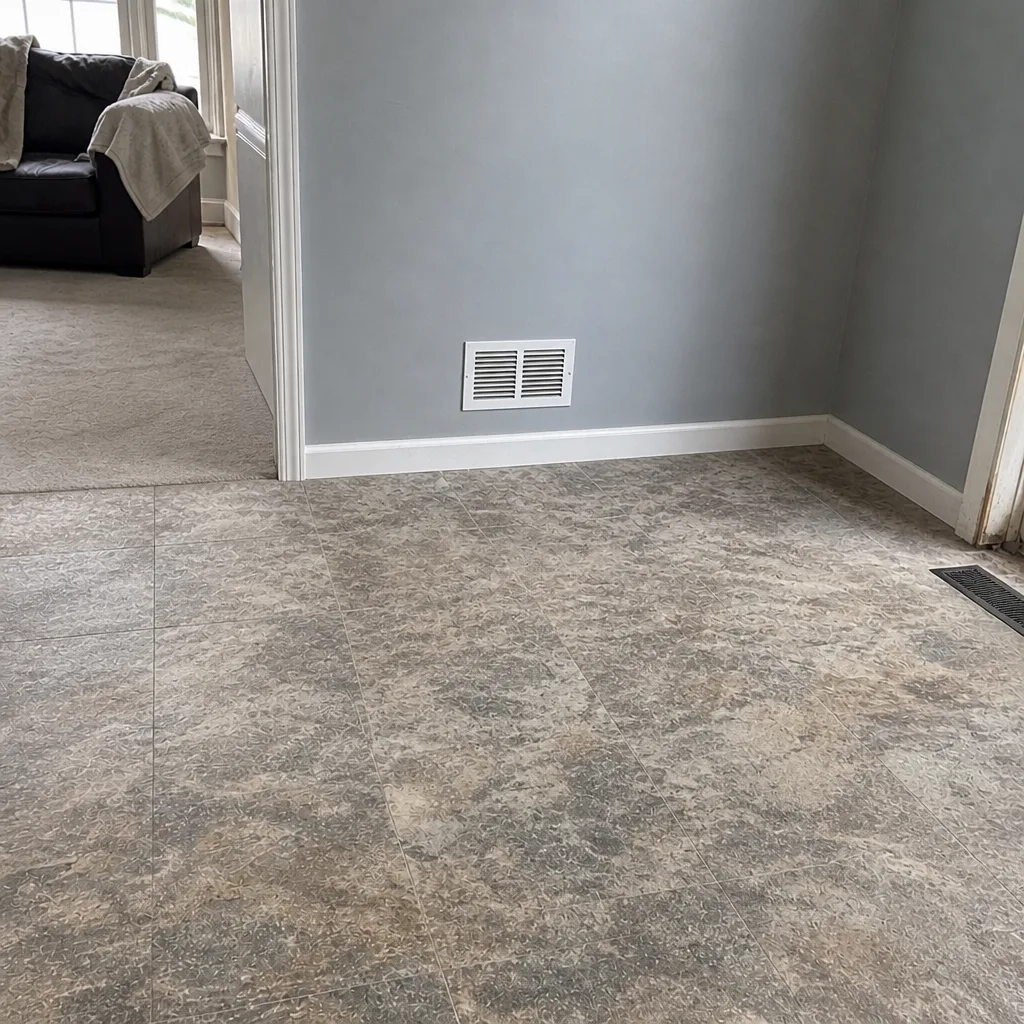
Whole-system duct and dryer vent check with before-and-after photos - you see exactly what came out of your vents
That "$99 whole-house special" is a bait ad - the real number appears once they are in your hallway, or the "clean" is a shop-vac at the register. We photograph the inside of your ducts before and after instead.
Air Duct Cleaning Maintenance Schedule: What to Do and When
The standard advice says clean your ducts every three to five years. That number was written for an average household, and most households aren’t average. If you have two shedding dogs, or you tore out a wall last spring, or your HVAC filter keeps loading up in weeks instead of months, your ducts may have aged three years in six. Calendar rules ignore the variables that actually drive contamination: pet load, renovation dust, filter grade, and the pollen and humidity swings we get in Indianapolis. This guide replaces the calendar with a decision framework. You’ll learn the triggers that reset your clock, the seasonal tasks that extend the interval, and the one component that follows a fixed annual schedule no matter what.
Quick Answer
Most homes need professional duct cleaning every three to five years, but that interval shortens to one to three years when you have heavy pet shedding, recent renovations, or chronic allergy symptoms. On top of that baseline, replace your HVAC filter every one to three months depending on grade and load, and clean your dryer vent once a year without exception because of fire risk. In Indianapolis, schedule around the spring pollen peak and the August humidity build, when ducts collect the most material. Use the triggers in this guide to decide whether your own interval should shrink or stretch.
Styles & brands we work with
- Whole-home duct cleaning
- Dryer vent cleaning
- Camera inspection
- Sanitizing & deodorizing
Table of Contents
- Why the 3-to-5-Year Rule Doesn’t Fit Your House
- The Triggers That Reset Your Cleaning Clock
- Your HVAC Filter Is a Diagnostic Tool
- Monthly and Seasonal Tasks That Extend Your Interval
- The Indianapolis Seasonal Calendar
- Dryer Vent: The Fixed Annual Schedule
- What Professional Cleaning Actually Involves
- Common Mistakes to Avoid
- When to Call a Professional
Why the 3-to-5-Year Rule Doesn’t Fit Your House
The three-to-five-year figure comes from an assumption of average: average shedding, average filter maintenance, average occupancy, no major renovation in the recent past. Your home rarely scores average on all four at once. A single variable running high pulls the whole interval down. Two or three variables running high can cut the recommended interval in half.
Consider what fills a duct system over time. Household dust passes through the return grilles and settles on duct walls wherever airflow slows. Pet dander binds to that dust and makes it stickier, so more of the next batch adheres. Renovation dust from drywall, sawdust, and insulation is heavier and more abrasive than ordinary household dust, and it loads a system fast. Outdoor particulate enters through the return, which means whatever is in the air on a given week ends up inside the ducts on that week. In Indianapolis, that means spring tree pollen, summer humidity, and the fine dust that follows a dry spell all leave their mark.
We’ve seen this play out through our work with the Sentry Air Duct Cleaning team and the equipment we run. A filter-loading pattern tells you more about your actual interval than any calendar recommendation. When you understand the variables, you stop guessing and start reading the evidence your own HVAC system gives you every month. The rest of this guide walks through each variable and how to weigh it.
The four variables that matter most
- Pet load: One heavy-shedding dog or two cats can double the rate at which dust accumulates on duct walls.
- Renovation activity: Any project that opens walls, disturbs insulation, or generates drywall dust resets the clock immediately.
- Filter grade and habits: A cheap filter changed on time beats an expensive filter left in too long. The habit matters more than the grade.
- Local climate cycles: Indianapolis spring pollen and August humidity push seasonal peaks that fill ducts faster than the annual average suggests.
The Triggers That Reset Your Cleaning Clock
A trigger event is anything that changes the amount or type of material entering your ducts. When one happens, ignore the calendar and schedule based on the event. These are the triggers we see reset the clock most often.
- A new pet joins the household. Even a short-haired pet adds dander and hair to the return air. Within a few months, duct walls carry noticeably more material. Reset your interval to one to three years after the pet settles in.
- You complete a renovation. Drywall dust and sawdust travel through the whole system even when you seal off the work area. Schedule a cleaning as the final step of the project, after the dust settles, not before.
- You replace the HVAC system. A new air handler or furnace deserves clean ducts so the new equipment doesn’t inherit the old system’s debris. This also protects the warranty relationship with your HVAC contractor.
- You experience flooding or water intrusion. Moisture in the duct system is a contamination event. Cleaning and drying follow, and any compromised duct sections get repaired. Our air duct cleaning work in these situations often pairs with duct repair.
- You move into a home with unknown history. You don’t know when the previous owner last cleaned the ducts, or whether they ever did. Treat the move-in as a reset.
- Allergy or respiratory symptoms appear or worsen indoors. If symptoms track with time spent at home, your ducts may be contributing. A cleaning plus a filter upgrade is a reasonable next step.
When two or more triggers hit in the same year, treat your interval as the shortest applicable window, not an average. Two shedding pets plus a spring renovation means the ducts may warrant cleaning within twelve months, not three years. Trigger-based scheduling is more work than a calendar reminder, but it’s tied to what’s actually happening in your home.
Your HVAC Filter Is a Diagnostic Tool
Most homeowners treat the filter as a maintenance chore. It’s more useful than that. The rate at which your filter loads tells you how hard your duct system is working to keep air clean, and by extension, how quickly the ducts themselves are accumulating material.
Here’s how to read it. Mark the date on the filter frame when you install a new one. Check it after four weeks. If the filter is visibly gray and matted across the surface, your air is carrying a heavy particulate load and your ducts are absorbing some of it. If the filter looks close to new after four weeks, your ducts are likely in reasonable shape and your interval can stretch toward the longer end.
What filter loading rate tells you
- Matted in under four weeks: High particulate load. Ducts are likely contributing. Consider cleaning sooner and upgrading filter grade.
- Gray but still passing air at eight weeks: Typical load. Stay on your normal change interval and keep watching.
- Still light at twelve weeks: Low load. Your ducts are probably cleaner than average, and you can stretch your professional interval.
A filter that collapses in weeks while your neighbor’s lasts three months is a signal. Same city, same climate, different household. The filter is telling you something specific about your own system, and it’s worth listening. For homeowners who want to go deeper than a filter reading, integrating products like an Aprilaire or Honeywell filtration system can raise the baseline air quality and take pressure off the ducts between cleanings. Our technicians have up to 13 years of experience reading these patterns and can help you interpret what your filter is showing.
One caution: don’t chase the highest filter grade without checking what your system’s blower can handle. A filter that’s too restrictive for the blower can strain the system and reduce airflow. The right grade for your equipment is a conversation, not a browsing decision.
Monthly and Seasonal Tasks That Extend Your Interval
The homeowner tasks below don’t replace professional cleaning, but they extend the interval meaningfully. Every one of them reduces what reaches the ducts in the first place. The math is simple: less material in, less material to remove later.
Monthly tasks
- Check and change the HVAC filter. Mark the date. Replace based on what you observe, not on a fixed calendar you’ll forget. Most homes fall in the one-to-three-month range.
- Vacuum return grilles. The grille is the front door to your ducts. A dusty grille sheds dust straight into the system every time the blower runs.
- Dust and vacuum high-traffic rooms. Regular vacuuming with a HEPA-equipped machine cuts the load on the return.
- Check the dryer vent for lint buildup at the exterior flap. If you see lint accumulating at the outside hood, the run is loading up. More on that below.
Seasonal tasks
- Spring (March through May): Replace the filter going into allergy season and keep windows closed on high-pollen days, especially during tree pollen peaks.
- Summer (June through August): Watch humidity. An HVAC system running hard in humid weather pulls more moisture through the return. Check for condensation near the air handler and address it early.
- Fall (September through November): Before heating season, check the filter, vacuum grilles, and schedule any cleaning you’ve been putting off so the ducts are ready for the closed-window months ahead.
- Winter (December through February): Closed windows mean the whole household load cycles through the ducts. Keep filters fresh and watch for dust buildup on supply registers.
None of these tasks is difficult. The value is in doing them consistently, because consistency is what buys you the cleaner ducts and the longer interval.
The Indianapolis Seasonal Calendar
Climate shapes duct contamination more than most homeowners realize. Indianapolis sits in a region with a pronounced spring pollen season and a humid summer. Both leave material in the ducts, and the timing of the peaks tells you when cleaning is most worthwhile.
Spring in Indianapolis brings tree pollen starting in late March and running through May. Pollen grains are small enough to pass through standard filters in quantity, and they enter the return with the outdoor air drawn in during naturally ventilated months. The weeks after the pollen peak are when ducts are fullest. If you’re scheduling once a year around a seasonal peak, late spring through early summer is the window that captures the most accumulated material.
August humidity is the second major factor. Higher indoor humidity means the HVAC system runs longer and moves more air through the return. Dust that would have stayed on a floor becomes airborne at higher humidity, and the ducts absorb it. If your home has any moisture issue at all, this is the month to check for it. It’s also the month to think about whether your indoor humidity control, potentially with a Guardsman or Aprilaire product, is doing what it should.
Why neighborhoods vary
The seasonal pattern is city-wide, but the accumulation is not. Neighborhoods with more mature trees produce more spring pollen load, while newer construction areas with active building tend to see more construction-related dust. Homeowners in older neighborhoods around the city may find their ducts need attention more often than expected because of the density of mature trees and the age of the ductwork itself. In either case, the local climate and the local housing are the same variables driving the same problem, and the schedule has to account for both.
Dryer Vent: The Fixed Annual Schedule
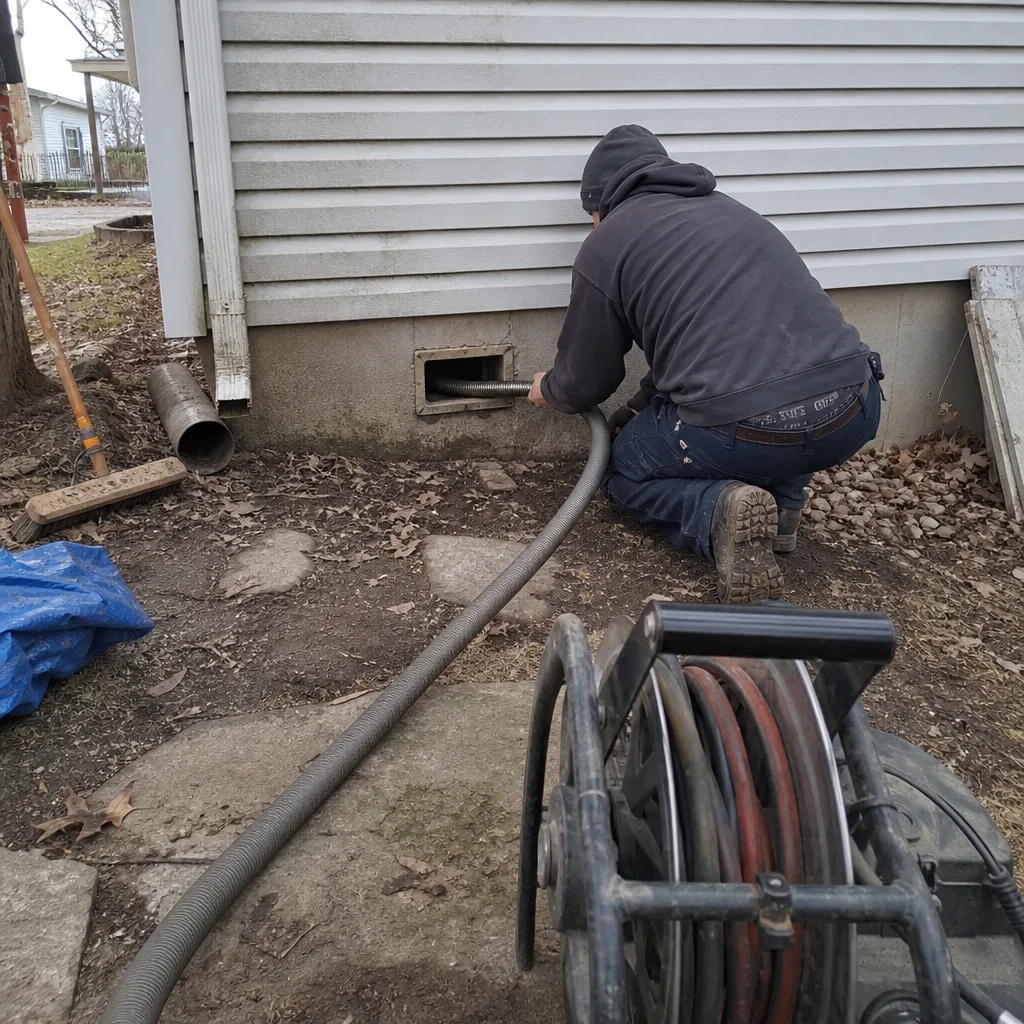
Every other part of this guide is about adjusting an interval. The dryer vent is different. It runs on a fixed annual schedule, and the reason is fire risk, not air quality. A clogged dryer vent is a fire hazard, and it’s one of the leading causes of residential fires in the country.
The mechanism is simple. Lint escapes the dryer’s internal filter and travels into the vent run. It accumulates on the walls of the duct, narrowing the passage. Reduced airflow makes the dryer run hotter and longer, and lint is highly flammable. The combination is what makes dryer vent maintenance a safety task rather than a convenience task.
Once a year is the baseline for most households. Households with heavy laundry loads, longer vent runs, or a vent that exits through the roof may need it more often. The warning signs to watch for between cleanings:
- Clothes take longer than usual to dry, or the dryer runs a full cycle and clothes still feel damp.
- The dryer or the vent hood feels unusually hot to the touch.
- Lint accumulates around the exterior vent flap.
- The laundry room feels more humid than usual after a cycle.
- You notice a burning smell, which is a stop-using-immediately signal, and a professional should check the vent before you run the dryer again.
Our dryer vent cleaning work is scheduled around that annual interval and can be paired with a duct cleaning so both components get addressed together. Fire prevention is the reason to keep this on a fixed schedule while everything else flexes.
What Professional Cleaning Actually Involves
Understanding the process helps you tell the difference between a real cleaning and a quick pass. The equipment matters, and so does the sequence.
- Inspection. The technician inspects the system, checks for compromised duct sections, and identifies any repair needs before cleaning begins.
- Containment. Air filtration equipment like Abatement Technologies units runs during the work to capture dislodged particulate rather than letting it escape into the living space.
- Brush-contact cleaning. A Rotobrush brush-contact system physically dislodges debris from duct walls. Unlike air-whip-only methods, brush-contact cleaning actively rubs the surface where contaminants bond. Nikro HVAC equipment handles the vacuum and extraction side.
- Supply and return cleaning. Both sides of the system are addressed, including the plenum and registers.
- Repair of any compromised sections. Sealant, joint repair, and duct repair happen as needed so the cleaned system stays sealed. This is where having a company that can fix the ducts matters, because you don’t need a second contractor to handle what the cleaning reveals.
- Before-and-after verification. Photos of the ducts before and after give you something concrete to check against.
Clients who want to see the results should ask for before-and-after photos as part of the job. It’s a reasonable expectation, and a company that does brush-contact cleaning should have no trouble providing it. Our team at Indianapolis-based Sentry Air Duct Cleaning runs this sequence on every job, and we’re happy to walk you through what it involves.
Common Mistakes to Avoid
- Following the calendar instead of the triggers. If you had a renovation in spring, waiting three years because “the calendar says so” ignores the actual state of your ducts. Let the events, not the reminder, set the schedule.
- Stretching the filter change past its limit. A loaded filter stops protecting the system and starts restricting airflow. Mark the date and change based on what you see, not what you hope.
- Skipping the dryer vent because it seems fine. Dryer vents fail quietly. The absence of symptoms doesn’t mean the run is clear, and the annual check exists because the failure mode is fire.
- Assuming a cheaper price means a comparable cleaning. A company that runs only an air-whip rig isn’t doing the same work as brush-contact cleaning. Ask what equipment will be used on the job before you compare quotes.
- Cleaning the ducts without addressing the repair needs. If the ducts have gaps, disconnected joints, or crushed sections, cleaning them fixes nothing long-term. Repair has to be part of the plan.
- Ignoring Indianapolis’s spring and fall transitions. Scheduling cleaning in mid-winter, when the system has already run all season, misses the accumulated pollen and dust the spring and fall windows capture.
- Cleaning ducts after a renovation but before the dust settles. Give the dust a few days to settle, then clean. Cleaning too early wastes the visit.
When to Call a Professional
Some situations are clearly beyond what a homeowner can manage. Call a professional when you see visible debris blowing from supply registers, when a filter change doesn’t resolve chronic dust or allergy symptoms, when a renovation has just wrapped up, when the ducts have never been cleaned and the home’s history is unknown, or when the dryer vent shows warning signs of loading. Call a professional before using the dryer again if you notice a burning smell or unusual heat at the vent. For homes with aging or visibly damaged ducts, repair assessment needs to come before cleaning. Sentry Air Duct Cleaning offers free estimates in Indianapolis. Call (888) 382-8408. We answer 24/7. Fast dispatch from 7am to 7pm, Sunday through Friday.
See the difference
 Before
 After
 Before
 After
 Before
 After
Frequently Asked Questions
Most Indianapolis homes should schedule professional duct cleaning every three to five years, with a shorter interval of one to three years if you have heavy pet shedding, recent renovations, or persistent allergy symptoms. The local climate matters too: spring pollen and August humidity both push seasonal peaks that fill ducts faster than the annual average. A filter that loads quickly is the clearest signal your home may need a shorter interval. Call (888) 382-8408 for an exact quote – estimates are free.
Pricing for air duct cleaning in Indianapolis is set per job by a written estimate, because the cost depends on the number of systems, the length of the ductwork, accessibility, and whether repair work is needed. That’s also why per-vent pricing is a poor comparison tool across companies. Ask for a full-system estimate in writing before work begins so the price you agree to is the price you pay. Call (888) 382-8408 for an exact quote – estimates are free.
Cleaning helps when ducts are carrying the allergen load that reaches your living space, and it helps less when the source is elsewhere. If symptoms track with time spent at home and a filter change doesn’t resolve them, cleaning is a reasonable next step. For households in Indianapolis with a strong spring pollen season, keeping windows closed on high-pollen days and using a proper filter grade are equally important. Call (888) 382-8408 to talk through your situation – estimates are free.
Cheaper quotes usually reflect cheaper methods. An air-whip-only rig moves air through the ducts but doesn’t physically dislodge debris from duct walls the way a Rotobrush brush-contact system does. Some quotes also exclude supply-side cleaning, repair work, or proper containment. Comparing methods, not just totals, is what keeps you from paying twice for one job. Call (888) 382-8408 for an estimate that spells out the method – estimates are free.
Ask for before-and-after photos of your own ducts. Professional brush-contact cleaning produces visible change on the duct walls and in the plenum, and a legitimately run job can document it. If a company can’t show you what they removed, that’s a reason to ask more questions. Call (888) 382-8408 and we’ll walk you through how our verification process works – estimates are free.
More often. The dryer vent follows a fixed annual schedule because a clogged vent is a fire hazard, not an air quality issue. Most warehouses should clean it once a year, with more frequent checks for heavy laundry loads or longer vent runs. A dryer taking longer than usual to dry clothes is the most common warning sign. Call (888) 382-8408 to schedule an annual vent cleaning – estimates are free.
The Bottom Line
The three-to-five-year rule is a starting point, not a schedule. Your actual interval depends on the four variables that drive contamination: pet load, renovation activity, filter habits, and local climate cycles. Use your HVAC filter as a diagnostic, do the monthly and seasonal tasks that reduce the load, and treat the dryer vent as a fixed annual item because fire risk doesn’t flex. In Indianapolis, the spring pollen peak and August humidity are the windows to watch. When trigger events stack up, move the cleaning sooner. Sentry Air Duct Cleaning runs professional-grade Rotobrush and Nikro equipment on every job, handles repair alongside cleaning, and covers the dryer vent with the same relationship. Call (888) 382-8408 for a free estimate.
Written by the team at Sentry Air Duct Cleaning.