
Last updated November 16, 2026
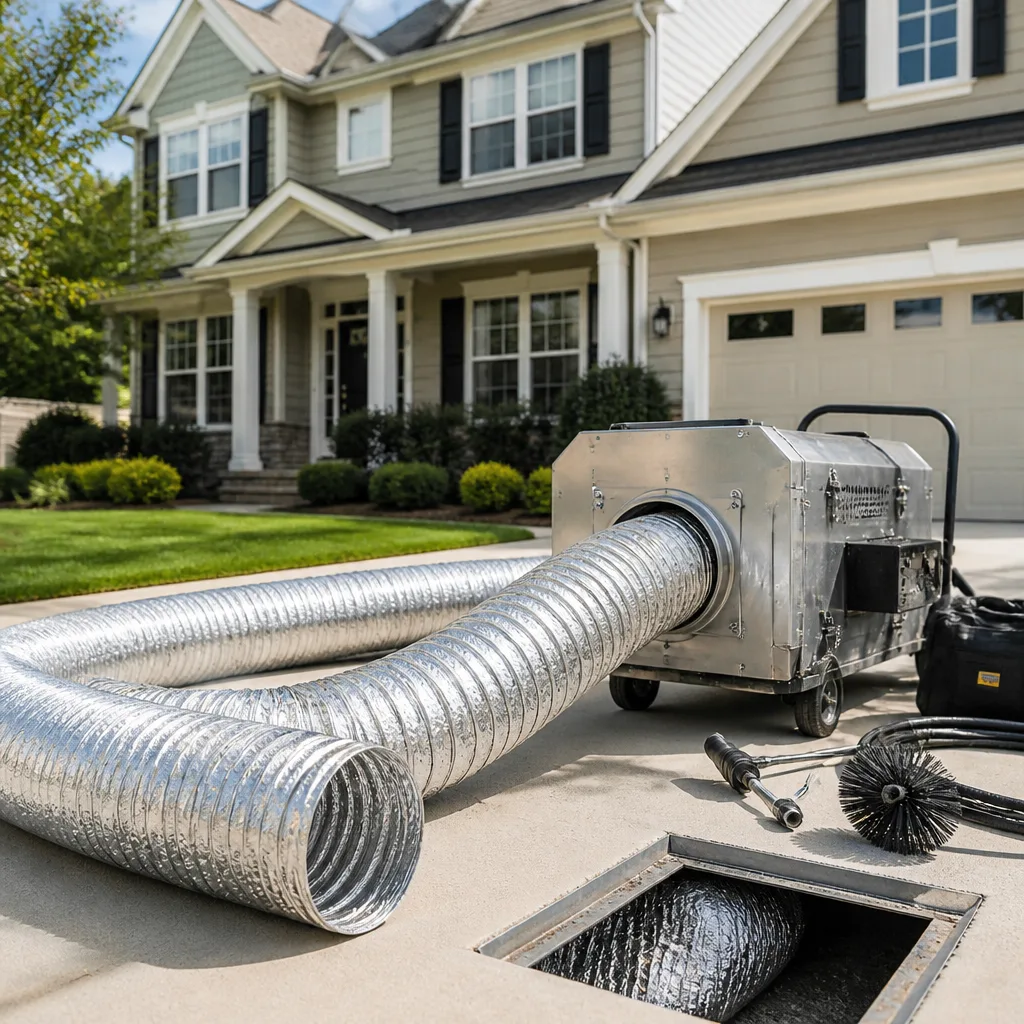 Whole-home duct cleaning
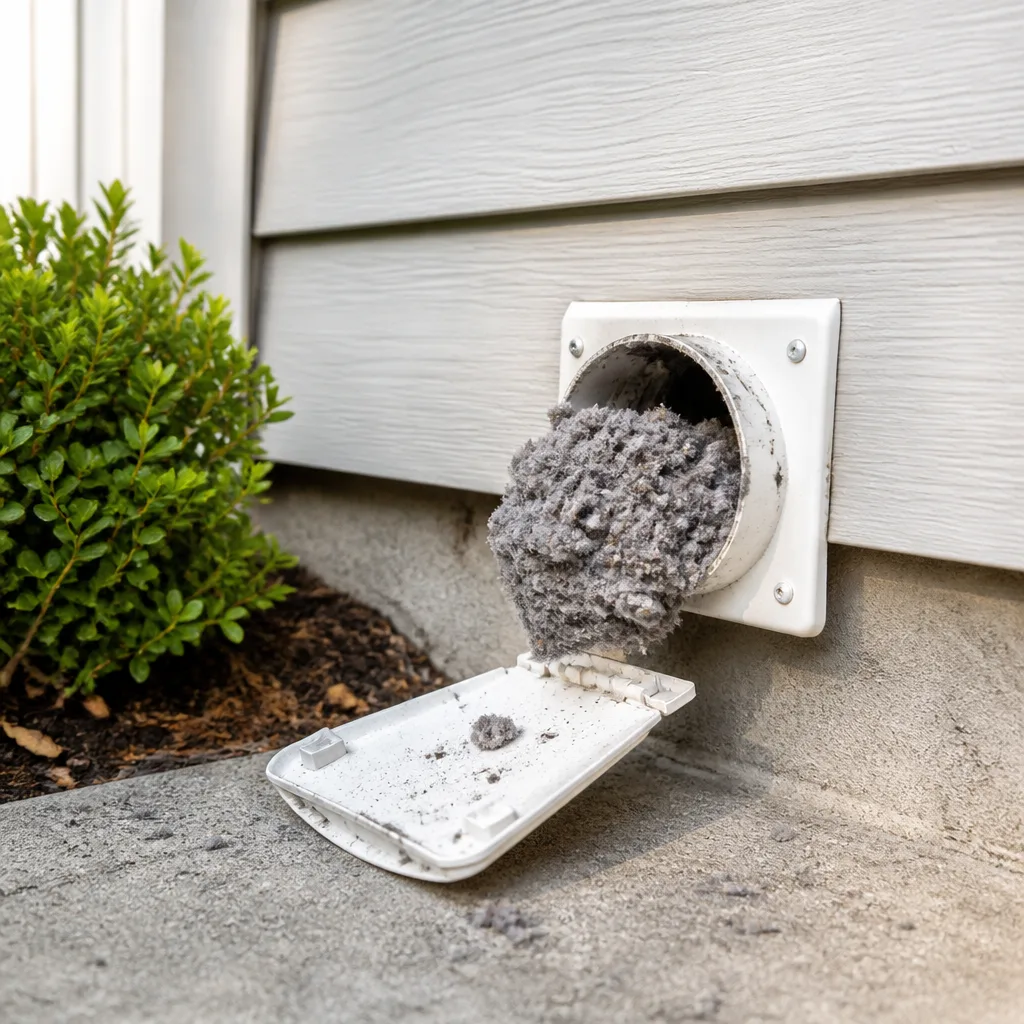 Dryer vent cleaning
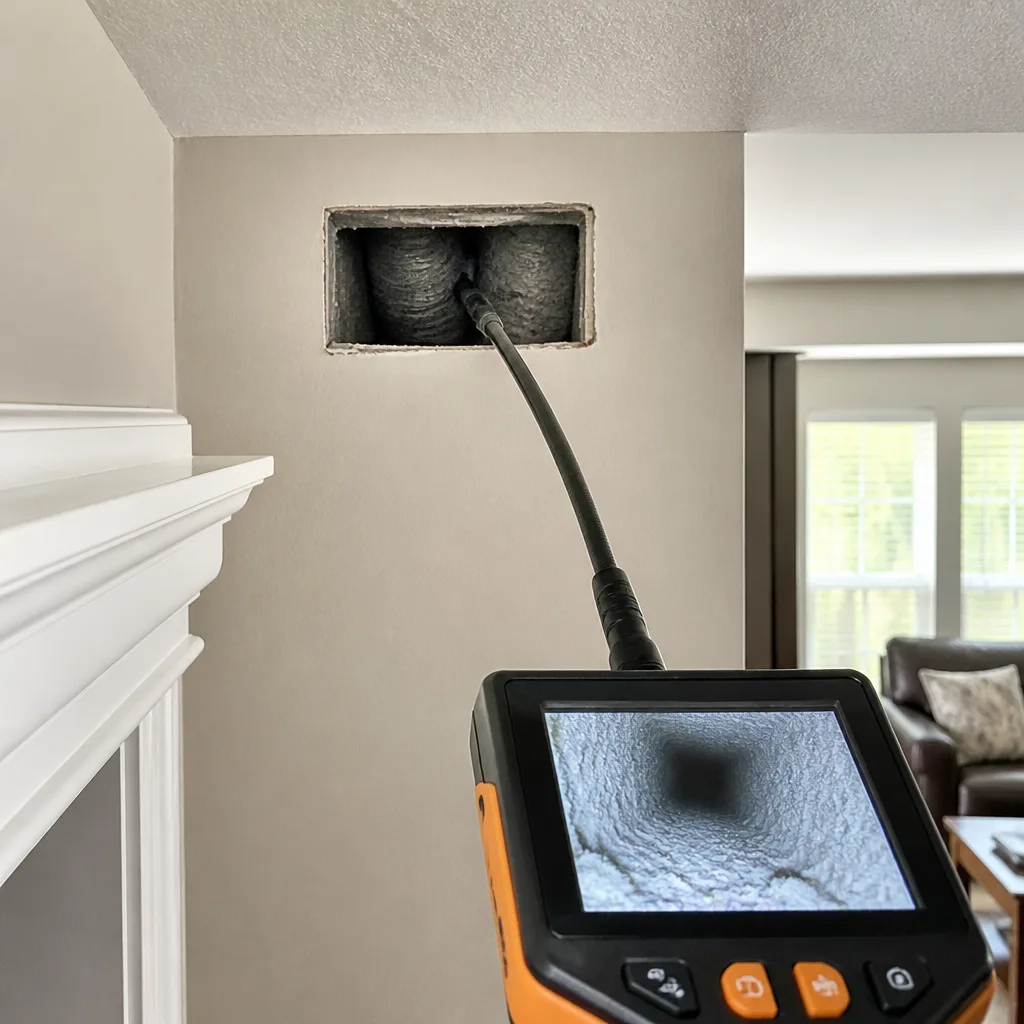 Camera inspection
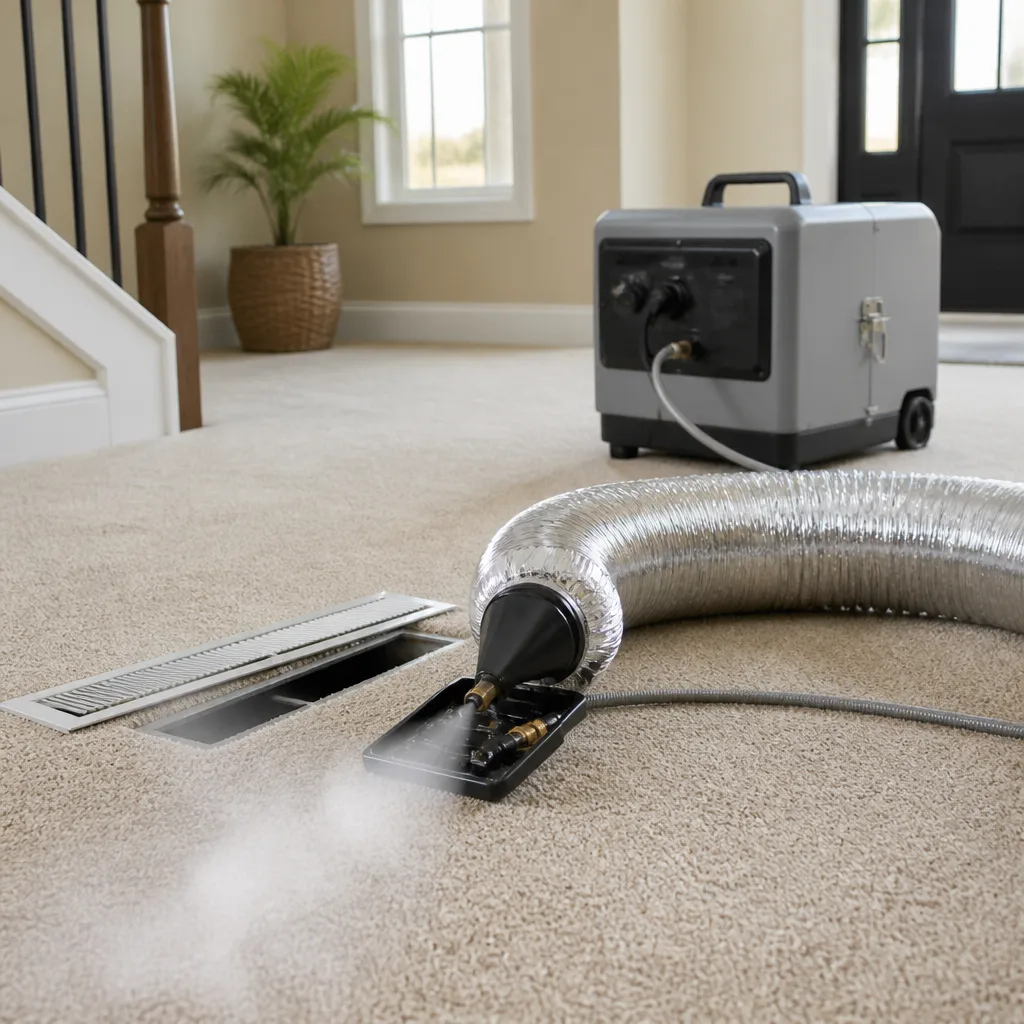 Sanitizing & deodorizing
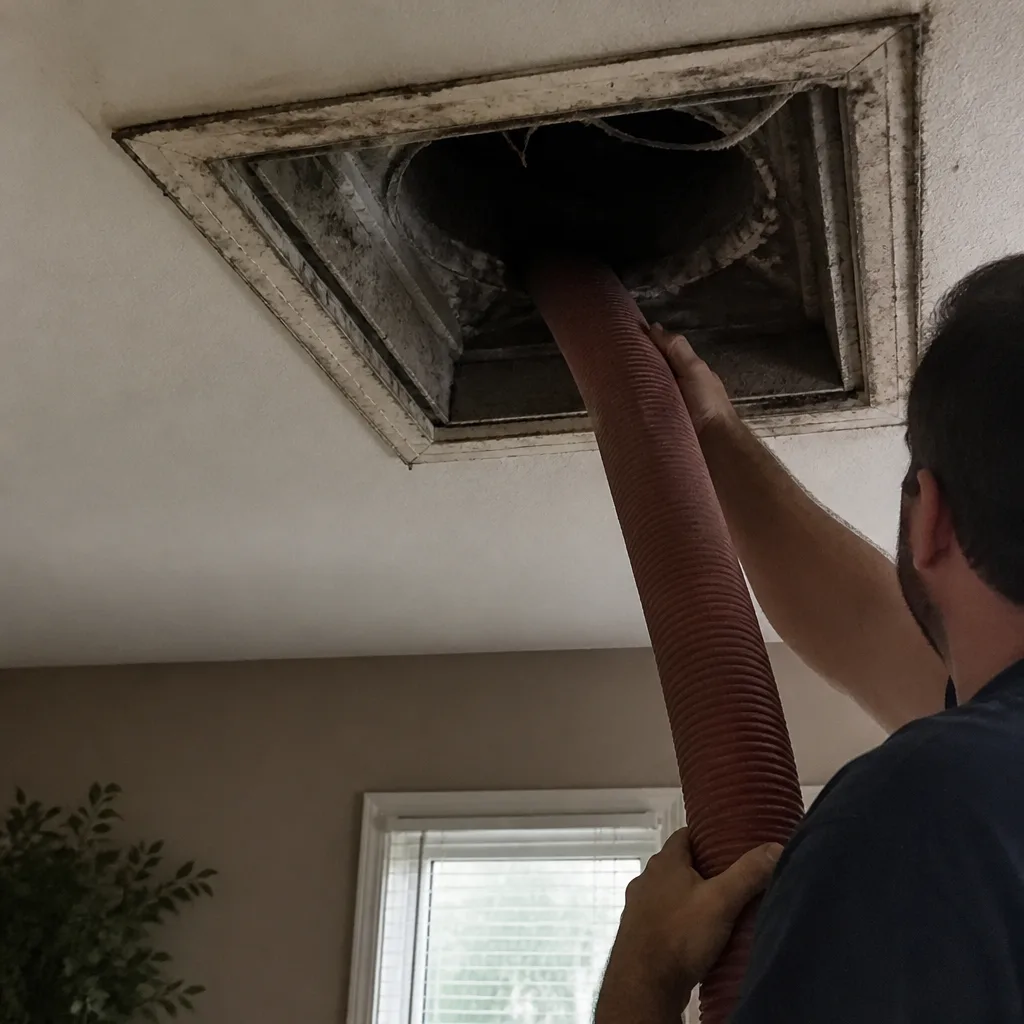
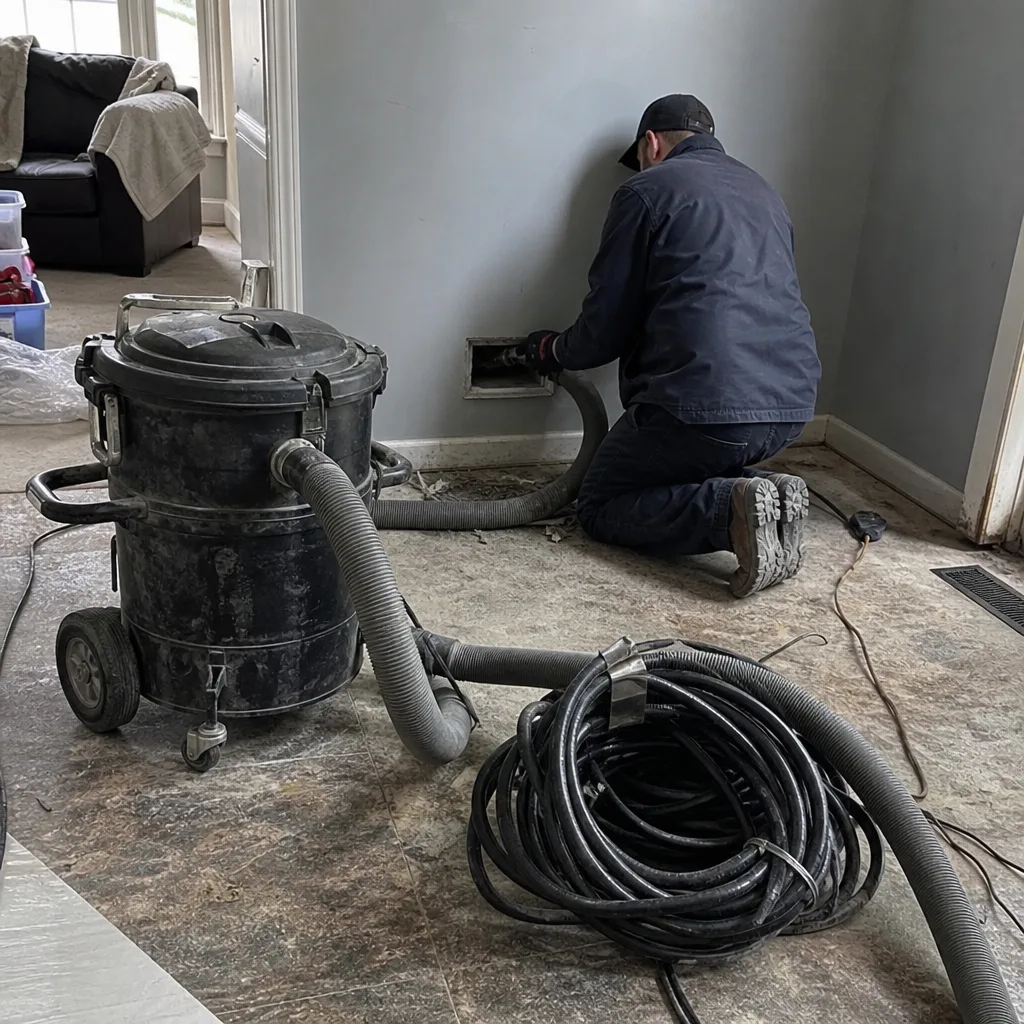
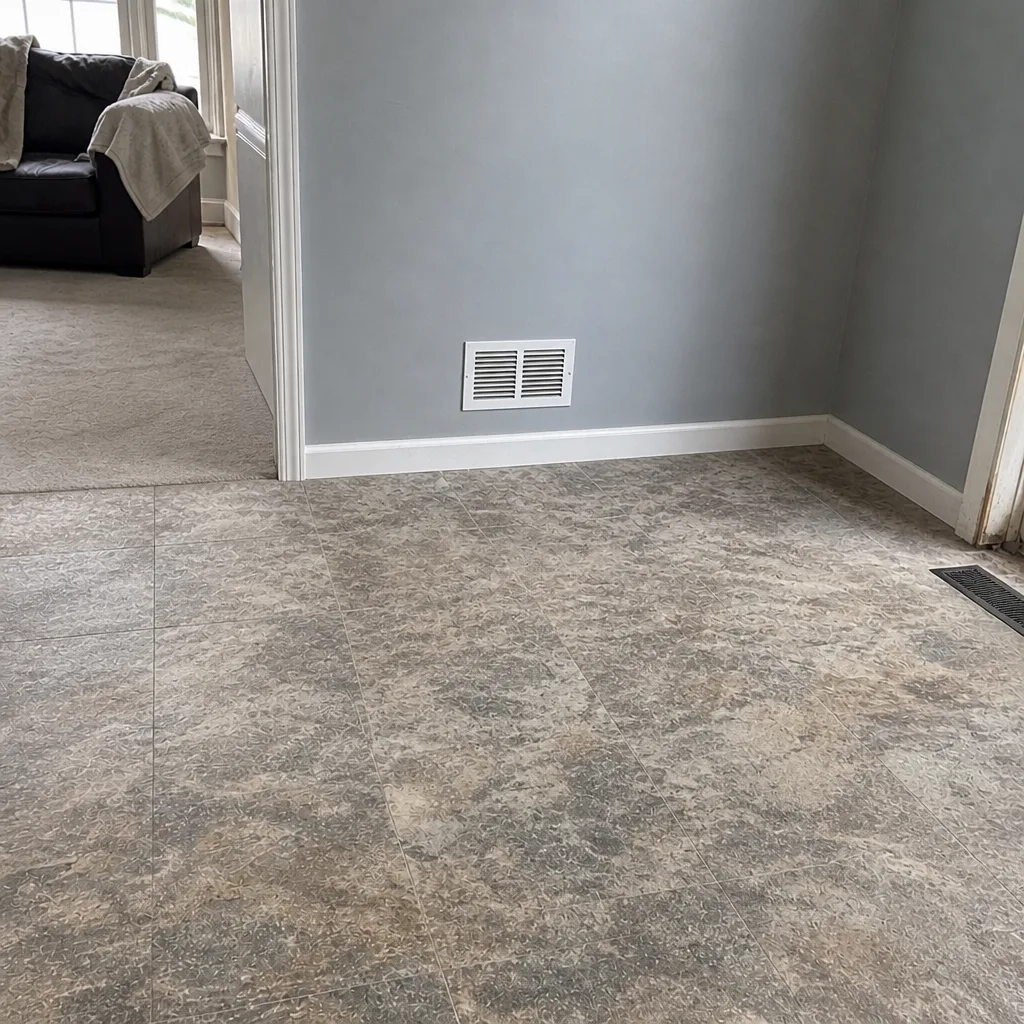
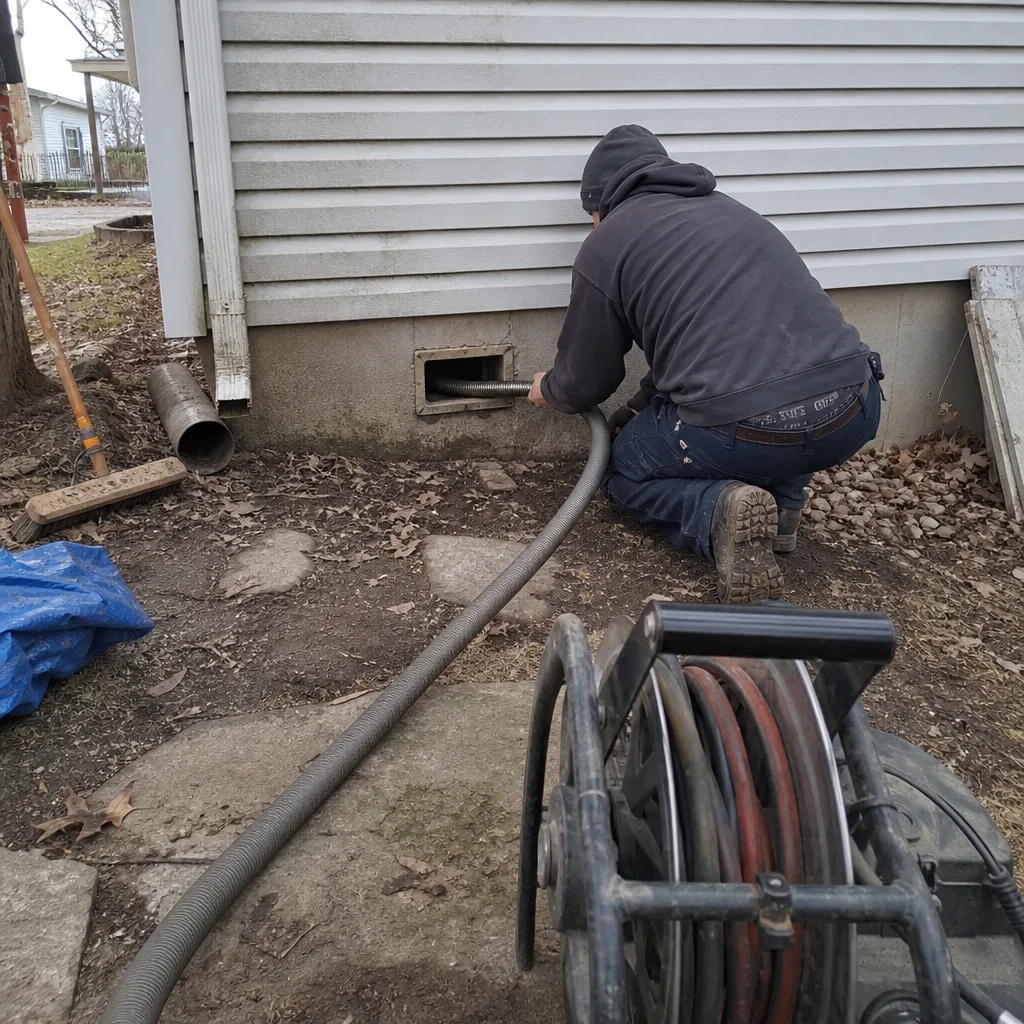
Whole-system duct and dryer vent check with before-and-after photos - you see exactly what came out of your vents
That "$99 whole-house special" is a bait ad - the real number appears once they are in your hallway, or the "clean" is a shop-vac at the register. We photograph the inside of your ducts before and after instead.
Choosing the Right Air Duct Cleaning Brand: A Buyer’s Guide for Indianapolis
There is no Angie’s List or Home Advisor algorithm that can tell you whether a company uses a 3,000 CFM negative pressure system or a shop-vac with a longer hose. That difference, though, is what determines whether your ducts actually get cleaned or just get a brief visit. Most homeowners in Indianapolis pick a duct cleaning company the way they pick a pizza place: whoever shows up first with a coupon. That’s backwards. The brand that matters isn’t the one with the biggest logo on the truck. It’s the one built around an equipment platform capable of doing the job properly. This guide will teach you how to vet equipment, ask the right questions, and spot the difference before you book.
Styles & brands we work with
- Whole-home duct cleaning
- Dryer vent cleaning
- Camera inspection
- Sanitizing & deodorizing
Quick Answer
The right air duct cleaning brand in Indianapolis is the one whose equipment platform can physically dislodge debris from duct walls and contain it, not just blow air around. Look for professional brush-contact systems (like Rotobrush), HEPA-grade negative pressure filtration (like Abatement Technologies), and a company that specializes in ducts rather than offering cleaning as an add-on. NADCA certification is a baseline; the equipment tier above that baseline is where real quality lives.
Table of Contents
- Why “Brand” Means Something Different in Duct Cleaning
- The Four Equipment Tiers You’ll Encounter
- What Rotobrush and Nikro Systems Actually Do
- How to Research an Indianapolis Company’s Equipment Before Booking
- Why NADCA Certification Is a Floor, Not a Ceiling
- Specialist vs. Generalist: Choosing the Right Kind of Company
- Using Before-and-After Documentation as a Screening Tool
- What Makes Indianapolis Ducts Different
- Common Mistakes to Avoid
- When to Call a Professional
- Frequently Asked Questions
- The Bottom Line
Why “Brand” Means Something Different in Duct Cleaning
In most home service categories, a strong brand means consistency, a big reputation, and some safety in numbers. In air duct cleaning, it means almost nothing on its own. That’s because duct cleaning has no standardized equipment requirement. Two companies can both advertise “professional air duct cleaning” and one can be running a purpose-built brush-contact system while the other is running a shop vacuum with a long hose and a piece of flex line taped to the end. Both are technically “cleaning” ducts. Only one is doing the work.
This is why we tell Indianapolis homeowners to think of the local brand as a signature on the equipment, not a logo on a mailbox. The company is really a bundle of decisions: what machine they invested in, what filtration system they use to contain what they loosen, whether they carry the tools to repair what they find, and whether they know anything about the air quality products that live downstream of the ducts.
Why This Matters More in Indianapolis Than Some Markets
Central Indiana has a particular combination of conditions that puts ducts under real load. Long, humid summers mean the system runs hard. Cold winters mean it runs hard again. Older housing stock in neighborhoods like Irvington, Broad Ripple, and Fountain Square often has galvanized ducts that were installed decades ago and have been quietly accumulating material ever since. Newer construction in suburbs like Fishers, Carmel, and Westfield usually brings flexible ductwork, which collects debris differently and can be damaged by aggressive equipment in the wrong hands. A brand whose equipment is built for one of those situations may be a poor fit for the other, and you won’t find that out from a review star rating.
When you look at Sentry Air Duct Cleaning, what we want you to see first is the equipment platform. Everything else flows from that.
The Four Equipment Tiers You’ll Encounter
Nearly every air duct cleaning company in the Indianapolis area fits into one of four equipment tiers. Knowing them lets you place a company the moment you see their setup or read their site.
Tier 1: Shop Vacuum and Hose
A standard wet/dry vacuum rated for shop use, sometimes with a homemade or off-the-shelf hose adapter feeding into a floor register. This tier removes loose surface dust near the vent opening and does essentially nothing deeper in the run. The vacuum’s filtration is not designed to trap fine particles, so it can actually stir material into the air. This tier is what you’re paying for when a quote seems dramatically cheaper than the rest.
Tier 2: Portable Air-Whip Rig
A step up. This uses compressed air to blast at duct surfaces while a vacuum pulls from the other end. Air whips knock loose material from the duct floor and the sides they can reach, but they don’t physically contact the duct wall. Caked-on debris, adhesive films, and material in corners or transitions often survives. Air whips also push a lot of loose dust down the run, which is why containment matters.
Tier 3: Truck-Mounted Negative Pressure System
A large vacuum unit in a truck or trailer connected to the home via a hose at one main trunk. This creates strong negative pressure, which is good for pulling debris out, but the cleaning action at the far end is still usually air-based. Truck-mounted systems are common in the industry and can produce good results with careful technique. The weakness is length of run: the farther a register is from the truck connection, the less effective the pull.
Tier 4: Brush-Contact Cleaning with Negative Pressure Filtration
The top tier combines two things: mechanical contact with the duct wall, and HEPA-grade filtration of everything that comes off it. Rotobrush brush-contact systems are the recognizable name in this tier. Abatement Technologies negative air machines are the recognizable name in the filtration half. This is the tier where a company has invested in equipment purpose-built for duct cleaning rather than borrowing tools from another trade.
To place a company in one of these tiers, ask what they use in plain language. “Do you use a Rotobrush?” gets a clear answer. “Do you clean ducts?” doesn’t.
What Rotobrush and Nikro Systems Actually Do
Rotobrush is a brush-contact cleaning system. It works by feeding a rotating brush head down the length of each duct run, physically dislodging debris from the duct walls as it goes, while a high-powered vacuum with HEPA filtration pulls the loosened material back into a contained unit. Unlike air-whip-only methods, brush-contact cleaning physically dislodges debris from duct walls. That means material that has bonded to the surface can actually be removed instead of just stirred up.
The rotating brush conforms to different duct shapes and diameters, which matters in a mixed-housing market like Indianapolis. A single home may have a mix of rigid galvanized trunk lines, flex branches, and transitions from one to the other. A brush system can adapt to those. An air whip alone can’t.
What About Nikro?
Nikro makes HVAC-specific cleaning equipment: vacuums, negative air machines, and related gear built for the trade rather than adapted from another industry. When a duct cleaning company is using Nikro HVAC equipment, it’s a sign they built their operation around tools made for this work. That’s a different commitment than buying a shop vacuum at a hardware store and printing up a “duct cleaning” banner.
Why the Equipment Also Means Containment
The other half of professional-grade cleaning is what happens to the material once it’s dislodged. If the vacuum system isn’t trapping fine particles, the cleaning itself becomes an air quality event inside the home. Abatement Technologies air filtration systems are in the category of equipment used in professional remediation: the goal is to contain dislodged particulates, not just push them through a filter that wasn’t built for the particle size. When a company advertises that equipment openly, it’s a good sign their cleaning process includes a real containment plan.
For a closer look at how the cleaning side works here in the city, our guide to air duct cleaning walks through the whole process step by step.
How to Research an Indianapolis Company’s Equipment Before Booking
You can identify most companies’ equipment tier before you ever pick up the phone. Here’s the sequence we recommend to anybody vetting duct cleaning in the Indianapolis area.
- Read the services page carefully. Look for specific equipment names. If the page only says “state-of-the-art equipment” or “the latest technology” without naming anything, they either don’t want you to compare, or they have nothing to compare. Companies proud of their equipment name it.
- Check for a repair capability. A company that offers duct repair alongside cleaning is typically running a professional platform because brush-contact cleaning is what tends to reveal compromised joints, disconnected sections, and crushed flex runs. A company that only cleans and can’t repair either has no repair capability or has never had to face what their cleaning reveals.
- Ask the exact question on the phone. “What equipment do you use?” is fair. If the answer is “a really powerful vacuum” or “professional equipment,” ask specifically: “Is it brush-contact or air-whip?” A real answer comes quickly from a specialist.
- Ask about containment. “What do you use to filter the air during cleaning?” If they can’t name a brand or explain the negative pressure setup, that’s info you needed.
- Ask what happens if they find a problem. A disconnected joint or collapsed flex run is common in older Indianapolis housing. Does the company have a repair capability, or will they hand you a photo and tell you to call an HVAC contractor?
- Review the pre-arrival instructions. A professional platform needs the system off during cleaning and access to registers. If the company doesn’t have any setup expectations or pre-visit checklist, they may be running a lighter-weight operation.
On-site verification matters too. When the technician arrives, the machine should be visible and have the brand label on it. Brush-contact systems have obvious brush heads and a hose that feeds into the duct, not a hose that just sits on the register. If a technician arrives with a vacuum that could belong to any contractor’s garage, that’s your answer about the tier.
For the complimentary safety side of the trade, we also clean the vent that most homeowners never think about until there’s a problem: dryer vent cleaning follows the same equipment logic, and it protects against one of the leading causes of residential fires.
Why NADCA Certification Is a Floor, Not a Ceiling
NADCA, the National Air Duct Cleaners Association, publishes the industry’s most-cited standards for how duct cleaning should be done, including the Assessment, Cleaning, and Restoration standard (ACR) that most serious companies follow. A company that holds NADCA membership or certification has committed to a baseline of training and standard practice. That’s genuinely valuable, and it’s a reasonable filter when narrowing your list.
Here’s what certification doesn’t tell you: what equipment that company actually runs. A certified company can still be an air-whip-only operation. A certified company can still send a technician with a shop vacuum. NADCA sets the standard for what good work looks like; it doesn’t mandate the specific machine tier a company invests in. Two NADCA members can be operating at very different levels of equipment quality.
What to Do With That
Use NADCA certification as a first-pass screen, the same way you’d check a plumber’s license before doing anything else. Once you have a short list of certified companies, that’s when you apply the equipment filter. This is why we tell Indianapolis homeowners to look at certification and equipment together, not sequentially. A certified company with a brush-contact system and negative pressure filtration is a different proposal than a certified company with an air whip and a shop vacuum in the back of a pickup.
Ask About the Technician
The other layer is who actually does the work. Our technicians have up to 13 years of experience on professional-grade equipment. That’s the kind of detail worth asking about on the phone: not just “are you certified?” but “who’s coming, and what are they trained on?” A certification belongs to a company; experience belongs to the people inside your ducts.
Specialist vs. Generalist: Choosing the Right Kind of Company
One of the most common mistakes we see in Indianapolis is hiring a company whose primary business is something else. HVAC contractors sometimes add duct cleaning as an add-on. Restoration companies sometimes offer it as part of a larger package. Handyman services sometimes include it in a list. In each case, the duct cleaning side is usually running on the lightest equipment tier because the company’s real investment is in its primary trade.
A specialist duct cleaning company, by contrast, is built around the duct work. That shows up in a few specific ways:
- Equipment depth. Multiple pieces of purpose-built gear rather than one tool borrowed from another service.
- Repair capability. A specialist can fix what it finds, not just clean around it.
- Full-ecosystem view. Cleaning, repair, and air quality products addressed together because they interact.
- Knowledge of the products downstream. Knowing how Honeywell and Aprilaire components in a home interact with a cleaning service matters for homeowners who run humidifiers, dehumidifiers, or media filters.
- Dryer vent cleaning on the service list. A specialist typically handles the other vent in the house because the equipment and knowledge overlap.
This isn’t a knock on HVAC contractors, who do work no duct cleaning company can do. It’s just a recognition that duct cleaning is a specialization of its own, and companies that specialize in it usually invest accordingly. When you hire for duct cleaning in Indianapolis, the question isn’t whether the company is good at their main job. It’s whether their duct work is the main job.
Using Before-and-After Documentation as a Screening Tool
This is the single most useful screening question in the whole process, and it costs nothing to ask: “Do you provide before-and-after photos of my own ducts?”
Companies with professional-grade equipment expect this question. They take photos during the work because the work is visible, the results are visible, and the photos are the honest record. Companies without professional equipment tend to resist. They may not have the tools that make the work visible, or the work may not be photogenic, or the before-and-after gap may be too small to show.
What Good Documentation Looks Like
- Before photos from inside the ducts. Not just the register face from the room. A photo looking down the run through a register opening or access port.
- Same register, same angle, after cleaning. Real before-and-after photos are matched photos. A random “clean duct” stock photo doesn’t count.
- Photos of any problem areas found. Loose joints, disconnected flex sections, rodent evidence, or heavy buildup should be documented before the technician touches them.
- Photos of the repair area, if repair happened. If the cleaning revealed damage that was repaired, the repair should be documented too.
Ask the company to send the documentation to you, not just show it on a phone screen at the end of the visit. It’s your house. You should have the record. A company running brush-contact cleaning with proper filtration will have plenty to show. A company running a shop vacuum will not.
The best screening happens before the appointment. Our team is happy to walk you through how we work when you call. If you’re comparing Indianapolis companies, ask each one the same three questions: what equipment, what containment, what documentation. You’ll have your answer before anyone steps inside.
What Makes Indianapolis Ducts Different
Indiana’s climate puts real seasonal demand on HVAC systems. Hot, humid summers mean the system runs continuously for months, and that pulls a steady volume of particulate through the return. Cold winters mean the system runs again, this time pulling dry dust. A house in Indianapolis can see both extremes in a single year.
The housing stock adds a second layer. Neighborhoods around Indianapolis have houses going back well over a century in some cases. Galvanized ducts installed mid-century have often accumulated material for a very long time, and in many cases the joints and connections have loosened along the way. That’s why a duct cleaning company with an air-whip-only setup struggles in those homes: the loose joints leak air, the air whip can’t truly clean the binding debris, and nothing about the visit addresses the joint. A brush-contact system plus repair capability can handle the whole thing.
Suburban construction in areas like Noblesville and Greenwood typically uses flexible duct branches as the primary run from trunk to register. Flex duct collects debris differently (usually along the low side and at the sag points) and is easier to damage with aggressive tools or with rough handling. Brush-contact systems with variable speed and adjustable brush heads can clean flex without tearing it. Equipment that isn’t built for flex is a risk to the ductwork itself.
Seasonal Timing
The best time to schedule duct cleaning in Indianapolis is usually just before air conditioning season in the spring or just before heating season in the fall, when the system is about to run hard and the results matter most. That said, an indoor air quality concern, a recent renovation, or a visible issue at a register can make the timing for you.
Homeowners comparing local options can learn more about the city and its neighborhoods on the Indianapolis page, and about the whole range of services on our air duct cleaning page.
Common Mistakes to Avoid
- Booking on price alone. A price dramatically below the Indianapolis market is usually an equipment-tier signal, not a bargain. The company running the cheapest quote is often running the cheapest machine.
- Assuming NADCA certification means top-tier equipment. Certification is a floor. Two certified companies can be operating in very different equipment tiers, and it’s your job to check.
- Hiring an HVAC contractor for duct cleaning without checking. HVAC contractors are excellent at system repairs. Duct cleaning may be a service they’ve added on with a light equipment investment.
- Assuming the equipment is what the website implies. Look for named brands on the company’s pages. “Professional equipment” is a phrase. “Rotobrush” is a platform. Only one of those tells you something.
- Not asking about containment. If a company can’t explain how they filter the air during cleaning, there’s a reasonable chance they’re not filtering it much.
- Not asking about repair capability. Many older Indianapolis homes have duct damage hidden behind the walls. A company that only cleans will hand you a photo and a phone number for someone else. A company that cleans and repairs handles it in one visit.
- Not asking for before-and-after documentation of your own ducts. This is the simplest screening question there is, and the answer tells you which tier of company you’re dealing with.
When to Call a Professional
Some homeowners schedule duct cleaning on a regular cadence, but more often it’s a specific event that brings the need forward. Recent renovation in the home is one of the most common. Drywall dust, sawdust, and construction debris make their way into the return, and the HVAC system pulls them through the whole duct network. Visible dust at a register after the system has been running is another. So is a new baby, a new allergy diagnosis, or a move into a home with unknown duct history.
Older Indianapolis housing stock also calls for a professional when transitions, joints, or flex sections show signs of damage: sagging ducts, audible leaks at connections, or a register that isn’t delivering the airflow it should. That’s a common way homeowners find out about a duct repair need, because the loss of airflow is the symptom.
Dryer vents are a separate in-scope reason to call. A clogged dryer vent is a fire hazard, and it’s a distinct service from cleaning your air ducts. Both are worth addressing when you call. Sentry Air Duct Cleaning offers free estimates in Indianapolis. Call (888) 382-8408. We answer 24/7, with fast dispatch from 7am to 7pm.
Frequently Asked Questions
Rotobrush uses a rotating brush head that physically contacts and dislodges debris from the duct walls while a HEPA-filtered vacuum pulls the loosened material into a contained unit. Air-whip cleaning uses compressed air to blast at duct surfaces without physical contact, which is more effective than a shop vacuum but less thorough than brush-contact cleaning, especially on bonded or caked-on material. If you have a choice, brush-contact cleaning is the stronger method. Call (888) 382-8408 for an exact quote on brush-contact cleaning in Indianapolis. Estimates are free.
Whole-system air duct cleaning in Indianapolis typically runs in the several-hundred-dollar range for a standard single-family home, priced per system and set by the written estimate before any work begins. Cost is driven by duct system size, accessibility, number of trunks and branches, and whether repairs are needed. Be cautious of any price dramatically lower than the local range, because that gap usually reflects the equipment tier. Call (888) 382-8408 for an exact quote. Estimates are free.
Cheap duct cleaning quotes usually reflect a lighter equipment tier: a shop vacuum, a basic air-whip rig, or a portable unit that wasn’t built for this work. Those companies can offer a lower price because their equipment investment is lower, and the cleaning result usually reflects it. The way to verify is to ask what equipment they use, what containment they apply, and whether they can show before-and-after photos of your own ducts. A company with professional equipment usually expects all three questions. Call (888) 382-8408 to compare a professional quote.
Ask for before-and-after photos of your own ducts, from inside the runs, matched by register and angle. Professional companies provide this as standard practice because their equipment makes the work visible. If a company resists the request or only shows you a general stock photo, that tells you something about their method. Save the documentation, because it’s a useful reference for future cleanings. Call (888) 382-8408 for an estimate and a look at how our documentation works.
NADCA certification is a meaningful baseline of professional standards, but it doesn’t specify which equipment a company uses. Two certified companies can be operating in very different equipment tiers. Use certification as a first-pass screen, then verify equipment, containment, and repair capability before booking. Certification plus the right equipment is a much stronger signal than certification alone. Call (888) 382-8408 to talk through your Indianapolis home and what equipment is the right fit.
Most homes do well with duct cleaning on a multi-year cycle, but the real answer depends on the home. Recent renovations, pets, allergy sufferers, older housing stock with damaged ductwork, and heavy HVAC use in Indiana’s climate can all push the timing forward. A recent remodel is often the strongest reason to schedule sooner rather than later. If you’re unsure, a walkthrough estimate will tell you what your specific system needs. Call (888) 382-8408 and we’ll help you figure out the right timing for your home.
The Bottom Line
When you’re evaluating air duct cleaning brands in Indianapolis, the brand that matters is the one built around an equipment platform capable of doing the job. Rotobrush brush-contact cleaning, Nikro HVAC equipment, and Abatement Technologies filtration are the names to look for because they represent a different tier of cleaning than a shop vacuum, an air whip, or a generalist add-on. NADCA certification is a reasonable baseline; ask about equipment above that line. Ask about containment. Ask about repair capability. Ask for before-and-after photos of your own ducts. And be wary of a price dramatically below the local range, because that gap is usually telling you something. The company that answers all four questions is the one to hire.
If you’d like a free estimate from a team that works on professional-grade equipment every day, call Sentry Air Duct Cleaning at (888) 382-8408. We answer 24/7. Fast dispatch from 7am to 7pm, Sunday through Friday.
Written by the team at Sentry Air Duct Cleaning.
See the difference
 Before
 After
 Before
 After
 Before
 After